50 Locations Across Morocco
Morocco Photography Locations
From Sahara to Sea
The definitive guide to where to photograph in Morocco. Fifty locations across seven regions with exact timing, access notes, and camera tips for each shot.
The Complete Location Guide
Where to Point Your Camera in Morocco
This guide exists to answer the most practical question a photographer asks before travelling to Morocco: where exactly should I go, and when exactly should I be there? Not general recommendations -- specific locations, specific times of day, specific camera settings, and honest notes about access and crowd levels.
Fifty locations are organised across seven regions, from the crowded iconic spots of Marrakech to hidden villages where you will likely be the only photographer present. Each location entry includes the best time of day to shoot, practical camera tips from photographers who have worked these sites extensively, access requirements and costs, and an honest assessment of tourist pressure.
For guidance on photographic technique, equipment, workshops, and seasonal planning, see our companion pages: Photography Tours and Workshops and Photography Masterclass. This page is about the where.
15 Locations
Marrakech
The Red City delivers more photographic variety per square kilometre than almost anywhere in the world. Pink clay walls glow at golden hour, souks overflow with colour, and the Atlas Mountains form a permanent backdrop to the south.
01
Djemaa el-Fna at Dawn
Low Crowds
Before the crowds arrive, the great square is nearly empty. Rose-gold light strikes the Koutoubia minaret and reflects off wet cobblestones from overnight cleaning. The few figures crossing the open space -- delivery men, cleaners, early vendors -- create solitary silhouettes against warm stone.
Best Time
Dawn, 30 minutes before sunrise
Camera Tip
Shoot from the east side looking toward the minaret. A 70-200mm compresses the empty square dramatically. The low angle of winter light is particularly effective.
Access
Free, open public square. Arrive before 6:30 AM for emptiness.
02
Koutoubia Mosque at Sunset
Moderate Crowds
The 12th-century Almohad minaret -- prototype for the Giralda in Seville -- turns from pink to deep gold in the final light. The surrounding gardens provide foreground with palm fronds and fountains. The western sky behind the minaret ignites with colour.
Best Time
Sunset, golden hour through blue hour
Camera Tip
Position yourself in the Koutoubia Gardens to the south or east. A 24-70mm handles both tight minaret compositions and wide garden-foreground shots. Stay for blue hour when artificial lighting adds warmth.
Access
Gardens open to public. Non-Muslims cannot enter the mosque itself.
03
Chouara Tanneries Overlook
Moderate Crowds
The ancient dyeing pits seen from above create a living mosaic of vivid colour -- saffron yellow, poppy red, cobalt blue, and the natural brown of leather curing. Workers move between the stone vats, creating human-scale reference against the geometric pattern.
Best Time
Morning, 9:00-11:00 AM when eastern light reaches the vats
Camera Tip
A 24-70mm from the overlook balconies captures the full tannery. Polarising filter reduces glare from wet hides. Shoot both wide for pattern and tight for worker portraits.
Access
Enter via leather shops around the tannery. A small purchase or tip is expected. Note: the tanneries are primarily in Fes, but Marrakech has its own smaller tanneries in the Bab Debbagh district.
04
Bab Agnaou Gate
Moderate Crowds
One of the nineteen gates of Marrakech and the most ornate. The carved stone arch with its concentric Kufic calligraphy bands is a masterwork of Almohad decoration. Late afternoon sidelight rakes across the carved surface, revealing depth and texture invisible at midday.
Best Time
Late afternoon, 3:00-5:00 PM for sidelight on carved detail
Camera Tip
An 85mm or 100mm macro captures the calligraphic details. Wide-angle from across the street shows full gate context. The warm stone responds beautifully to golden hour light.
Access
Public street. Stand on the opposite side of the road for full-gate compositions.
05
Souk Semmarine Overhead View
High Crowds
The main covered souk artery is roofed with woven reed canopies that filter sunlight into golden shafts. From elevated positions -- accessed via shops on upper floors -- you look down into a river of colour: stacked carpets, hanging lanterns, spice mounds, and a stream of passing shoppers.
Best Time
Mid-morning, 10:00-11:30 AM when light beams penetrate the canopy
Camera Tip
Ask shopkeepers on the upper floors for terrace access (a purchase helps). A 35mm lens gives natural perspective. The light shafts are the subject -- expose for the highlights and let shadows go rich.
Access
Negotiate access via upper-floor carpet or lantern shops. A small purchase is customary.
06
Saadian Tombs at Dawn
Moderate Crowds
The 16th-century royal necropolis features intricately carved cedar ceilings, Italian Carrara marble columns, and zellige tilework of extraordinary refinement. Early morning light enters through high windows, illuminating carved stucco in warm, directional shafts.
Best Time
Opening time, arrive at 9:00 AM for emptiest conditions
Camera Tip
Tripods are not permitted inside. Use a fast lens (f/1.4-f/2.8) and brace against doorframes. The Hall of Twelve Columns is the primary subject -- shoot from multiple corners for different light angles.
Access
Ticketed entry. First hour after opening has the fewest visitors.
07
Ben Youssef Madrasa Courtyard
High Crowds
The 14th-century Quranic school features a marble courtyard with a central reflecting pool surrounded by carved stucco, cedar, and zellige on every surface. Midday light, often harsh outdoors, enters the courtyard as soft, diffuse illumination perfect for architectural detail.
Best Time
Midday, 11:00 AM-1:00 PM for even, diffuse courtyard light
Camera Tip
A 16-35mm wide-angle captures the full courtyard symmetry. Include the reflecting pool for doubled patterns. The octagonal pool creates natural leading lines to the far arch.
Access
Ticketed entry. Midday is paradoxically the best time for photography even though it is busier.
08
Majorelle Garden
High Crowds
Yves Saint Laurent's garden features the famous Majorelle Blue -- a vivid cobalt that photographs brilliantly against tropical green foliage. Terracotta pots, yellow pathways, and bamboo groves create colour contrasts unavailable anywhere else in Marrakech.
Best Time
Opening time, 8:00 AM in summer, before tour groups arrive
Camera Tip
A 35mm or 50mm lens works for garden compositions. Isolate the blue walls against green palm fronds for maximum colour impact. Overcast mornings produce the most saturated colour.
Access
Ticketed entry. Professional photography permits available separately.
09
Musee de Marrakech Courtyard
Low Crowds
The museum occupies a restored 19th-century palace with a central courtyard of extraordinary Moorish architecture. Natural light falls through open sky into the courtyard, illuminating tilework and carved plaster with soft, even illumination ideal for architectural photography.
Best Time
Morning, 10:00-11:00 AM for balanced natural courtyard light
Camera Tip
Wide-angle for the full courtyard symmetry. Shoot upward to capture the massive bronze chandelier against open sky. The side rooms have interesting light-through-window compositions.
Access
Ticketed museum entry. Photography permitted without flash.
10
El Badi Palace Panorama
Moderate Crowds
The ruined 16th-century palace is an open expanse of sunken gardens, crumbling walls, and nesting storks against the Atlas Mountain backdrop. The golden-brown ruins glow intensely at golden hour, and stork nests on the walls add dramatic living elements.
Best Time
Golden hour, 1 hour before sunset for warm light on ruins
Camera Tip
A 24-70mm covers both panoramic ruin shots and stork details. Bring a 70-200mm for Atlas Mountain compression against the ruined walls. The sunken garden pools reflect the sky at blue hour.
Access
Ticketed entry. Open-air site with no shade -- hat and water essential in summer.
11
Mellah Balconies
Low Crowds
The old Jewish quarter features distinctive Spanish-style wrought-iron balconies unique in Marrakech. The narrow streets and ornate ironwork create layered compositions of shadow, texture, and architectural detail that differ markedly from the rest of the medina.
Best Time
Late afternoon, when sidelight catches the ironwork detail
Camera Tip
An 85mm prime isolates individual balcony details beautifully. Shoot upward at steep angles for dramatic perspective. The warm stone walls provide excellent backlit texture.
Access
Public streets. Walk the streets around Place des Ferblantiers.
12
Rahba Qedima Spice Market
Moderate Crowds
A small open square filled with apothecary stalls, spice mounds, dried chameleons, and traditional medicine sellers. The concentrated colour and texture -- pyramids of cumin, saffron threads, dried roses, kohl, and henna -- rewards both wide and macro compositions.
Best Time
Morning, 9:00-11:00 AM for active trading with good light
Camera Tip
A macro lens or extension tube captures spice detail. A 35mm includes the vendor and their display together. Ask before photographing sellers and make a purchase to build rapport.
Access
Free, open market square off Souk Semmarine.
13
Dyers Souk (Souk Sabbaghin)
Low Crowds
Freshly dyed skeins of wool and silk hang from poles above the narrow lane, creating cascades of saturated colour against the aged stone walls. The dripping dyes stain the ground in abstract patterns. This is one of the most photographically rewarding corners of any medina in Morocco.
Best Time
Morning, when fresh skeins are hung and colours are most vivid
Camera Tip
Shoot upward to fill the frame with hanging colour against sky. A wide-angle exaggerates the density of hanging threads. Include a dyer at work for human scale and narrative.
Access
Public souk lane. The dyers are accustomed to photographers.
14
Road to Palmeraie at Dawn
Low Crowds
The palm groves north of Marrakech stretch across thousands of hectares. At dawn, low light filters through the palm fronds creating long shadows and a green-gold atmosphere unlike anywhere in the city. The silence and emptiness contrast sharply with the medina.
Best Time
Dawn, first 45 minutes after sunrise
Camera Tip
A 70-200mm compresses rows of palms into graphic layers. Shoot toward the sun for silhouette compositions. The mist that sometimes lingers at dawn adds atmospheric depth.
Access
Accessible by road or bicycle from the medina. No entrance fee.
15
Atlas Mountain Backdrop from Palmeraie
Low Crowds
On clear mornings, the snow-capped High Atlas range forms a dramatic backdrop behind the palm groves. The contrast of tropical green palms against white mountain peaks is a composition unique to Marrakech and impossible to capture from within the city walls.
Best Time
Early morning, clear days between October and April for snow
Camera Tip
A 70-200mm at the long end compresses the mountains into a wall behind the palms. A polarising filter intensifies the sky and cuts haze. Best clarity is in the early morning before heat shimmer builds.
Access
Northern edge of the Palmeraie for clearest sightlines.
8 Locations
Chefchaouen
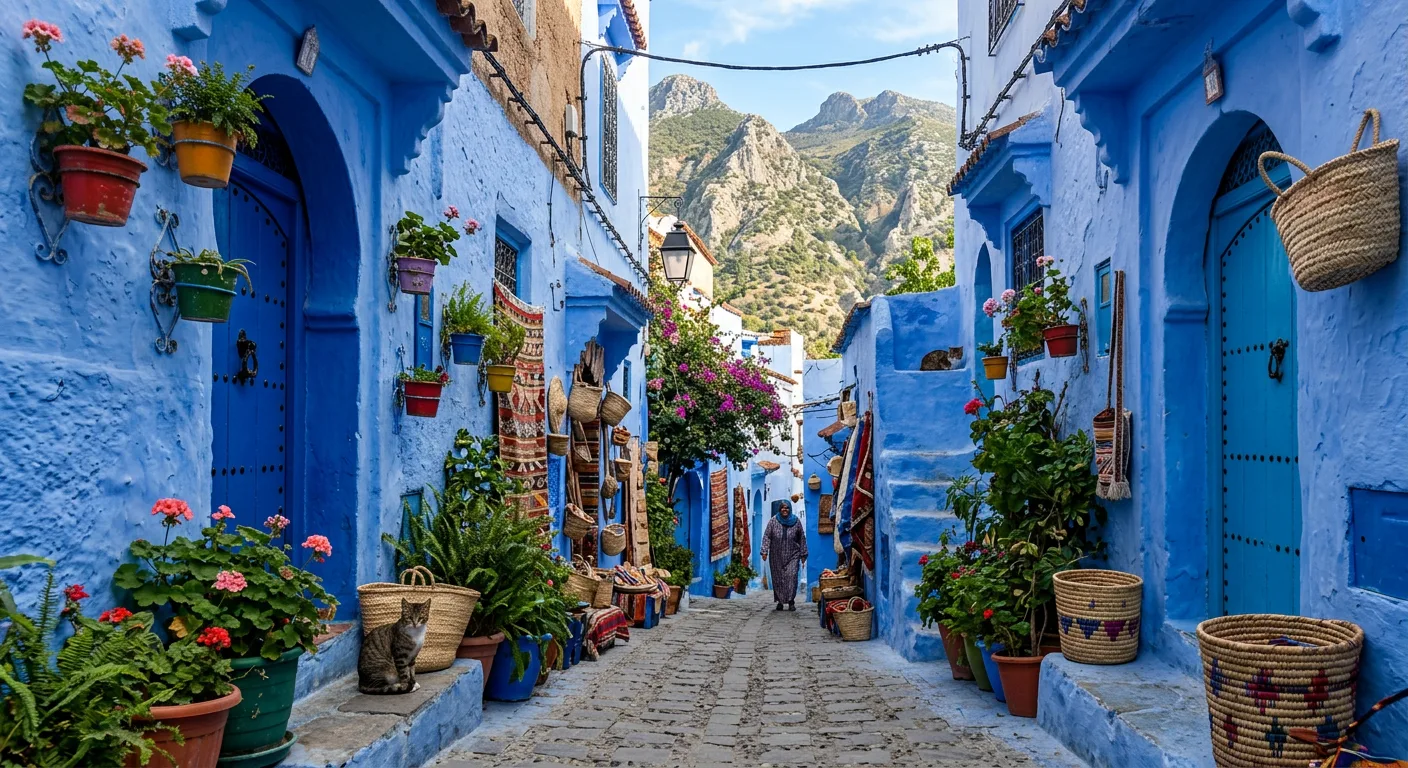
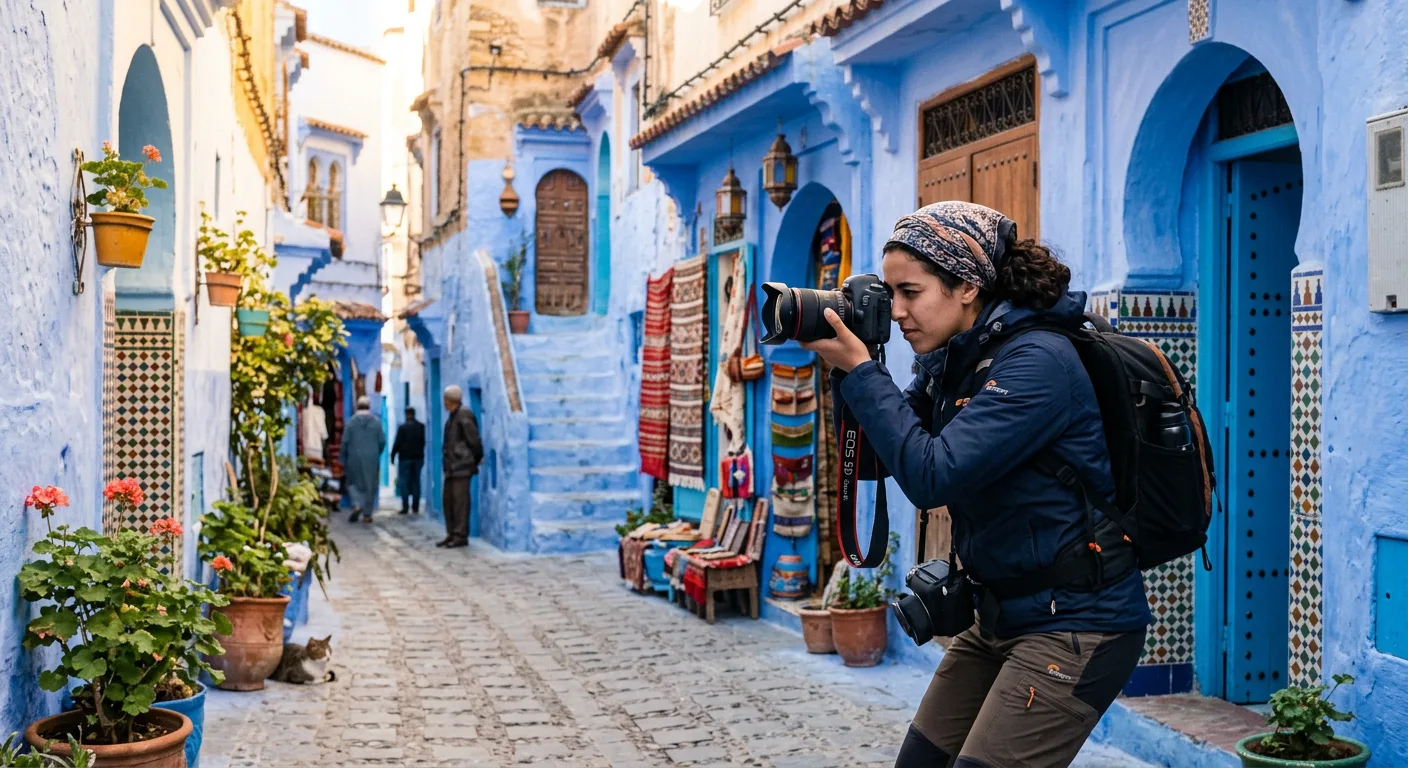
The Blue City is one of the most photographed places in Morocco for good reason. An entire medina painted in shades of cobalt, periwinkle, and cerulean creates an immersive colour experience with no equivalent anywhere in the world.
01
Uta el-Hammam Square Staircase
High Crowds
The iconic staircase at the main square features blue walls rising on both sides with terracotta flower pots providing warm colour contrast. The stepped perspective creates natural leading lines upward into the blue depths of the medina.
Best Time
Early morning, 7:00-8:00 AM before crowds fill the stairs
Camera Tip
A 35mm lens from the base of the stairs gives a natural leading-line composition. Include the flower pots for colour contrast against blue. Overcast mornings produce the most saturated blue tones.
Access
Open public stairway off the main square.
02
The Famous Blue Staircase (Rue Targhi Area)
High Crowds
A narrow alleyway with an arched overhead passage, blue stairs, and blue walls on every surface. This is the most reproduced image from Chefchaouen. The arch frames compositions naturally, and the narrow space concentrates the blue colour into an immersive tunnel.
Best Time
Dawn, 6:00-7:00 AM for empty conditions and soft light
Camera Tip
A 24mm wide-angle captures the full arch and staircase. Shoot from below looking up through the arch for the classic composition. A tripod in pre-dawn light produces the cleanest results.
Access
Public alleyway. The location is extremely popular -- only emptiness comes with early arrival.
03
Laundry Across Blue Alleyways
Low Crowds
Residents hang laundry across narrow blue lanes, creating canopies of colourful fabric against monochrome blue walls. The contrast between domestic textile patterns and the blue environment produces images that communicate daily life within this extraordinary colour palette.
Best Time
Morning, after 8:00 AM when laundry is freshly hung
Camera Tip
Look for bright-coloured fabrics against the deepest blue walls. A 50mm isolates individual scenes. Shoot upward for the laundry-as-canopy perspective.
Access
Residential alleyways throughout the medina.
04
Riad Cherifa Terrace Panorama
Low Crowds
Several riads and restaurants near the kasbah offer rooftop terraces with panoramic views across the blue medina rooftops. The layered blue architecture against the green Rif Mountains behind creates a composition of remarkable chromatic harmony.
Best Time
Late afternoon to sunset for warm light on blue walls
Camera Tip
A 24-70mm handles both panoramic sweeps and tight rooftop details. The late afternoon sidelight turns blue walls slightly purple, adding depth and dimension.
Access
Order a drink or meal at a rooftop restaurant for terrace access.
05
Cascade d'Akchour Waterfall
Moderate Crowds
A day trip from Chefchaouen leads through the Rif Mountains to this series of cascading waterfalls in a lush green gorge. The turquoise pool at the base of the main falls creates a natural swimming hole surrounded by red rock and green vegetation.
Best Time
Midday, when sunlight reaches the gorge floor
Camera Tip
A polarising filter is essential to cut surface glare and reveal the turquoise water colour. Long exposure (1-2 seconds with ND filter) smooths the cascading water for a silk effect.
Access
Approximately 1.5-hour drive plus a 45-minute hike. Guide recommended.
06
Spanish Mosque Hilltop at Sunset
Moderate Crowds
The abandoned Spanish-era mosque above the medina provides the definitive panoramic view of Chefchaouen. The entire blue city spreads below with the Rif Mountains rising behind. At sunset, the warm light transforms the blue town into shades of lavender and violet.
Best Time
Sunset, arrive 30 minutes before for positioning
Camera Tip
A 24-70mm covers both the wide panorama and tighter medina detail. Bring a tripod for blue-hour exposures after the sun sets. The city lights coming on at twilight add an additional layer.
Access
Free, 20-minute uphill walk from the medina. The path is steep but well-trodden.
07
Goats on the Hill Above Medina
Low Crowds
The hillsides above Chefchaouen are grazed by goats, and their presence against the blue city backdrop creates uniquely Moroccan compositions that combine pastoral agriculture with the extraordinary urban colour palette below.
Best Time
Morning, when goats are brought out to graze
Camera Tip
A 70-200mm compresses the goats against the blue medina background. Patience is required -- wait for the animals to silhouette against the city for strongest compositions.
Access
Open hillside above the medina, accessible from the Spanish Mosque trail.
08
Early Morning Empty Alleys
Low Crowds
Between 6:00 and 7:00 AM, the medina is almost empty of tourists. Residents go about morning routines -- sweeping doorsteps, opening shutters, carrying bread from the communal oven. The blue walls glow with soft, indirect dawn light, and the silence is extraordinary.
Best Time
Dawn, 6:00-7:00 AM before tourists emerge
Camera Tip
A 35mm or 50mm prime lens captures the quiet human scale of morning routines. The indirect dawn light requires ISO 800-1600 but produces beautifully soft, even illumination on the blue surfaces.
Access
Public medina streets. Walk quietly and respectfully in the residential sections.
10 Locations
Fes
The world's largest car-free urban zone is a medieval labyrinth of extraordinary architectural refinement. Fes delivers the most complex, layered photography in Morocco -- carved stucco, zellige tilework, leather tanneries, and a living city of craft workshops largely unchanged since the 14th century.
01
Chouara Tannery Overview
High Crowds
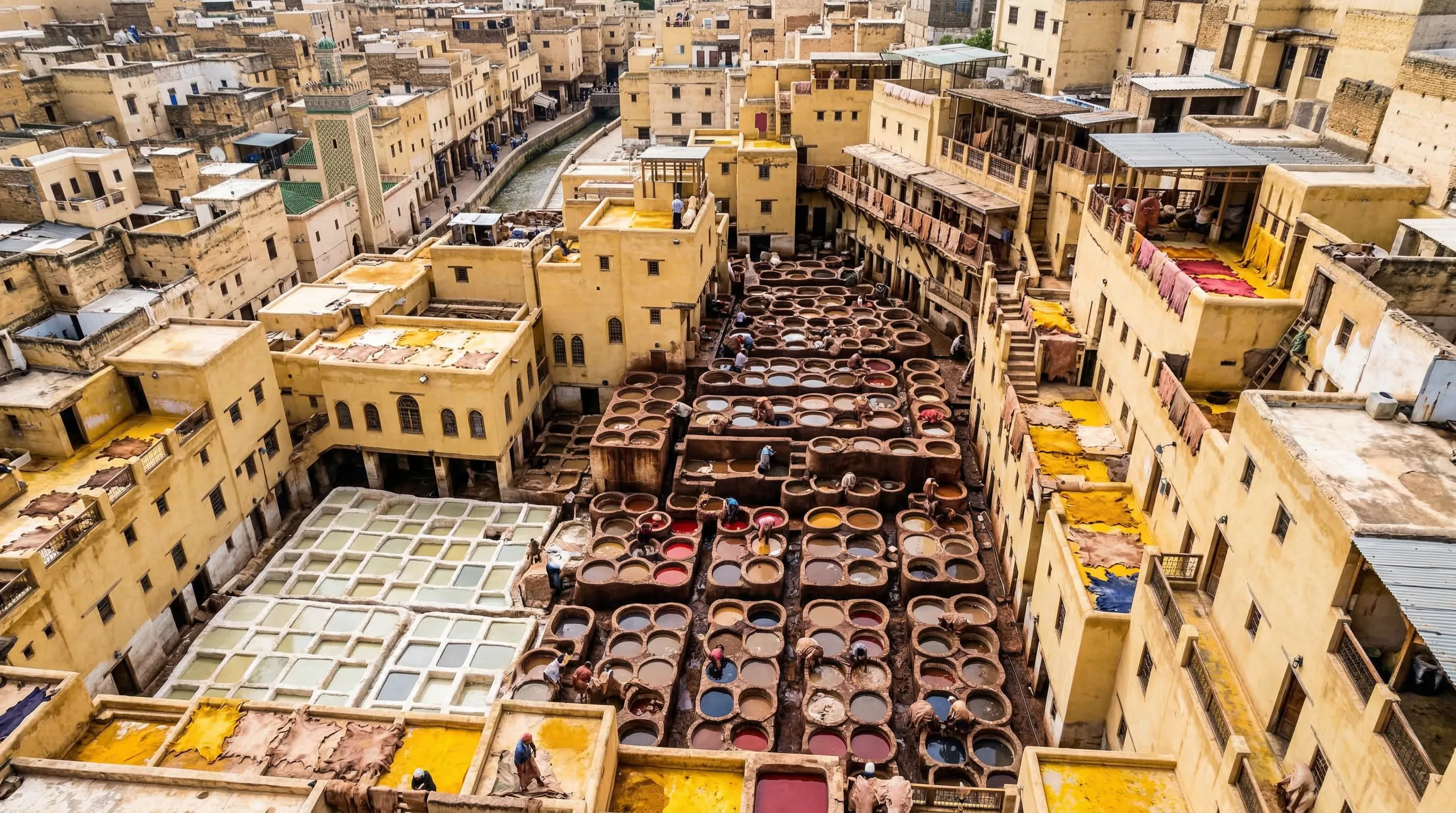
The world's oldest leather tannery, dating to the 11th century, is best seen from the leather shop rooftops. Dyeing vats of saffron yellow, poppy red, and cobalt blue create a living mosaic. Workers move between the stone pits using methods unchanged for a thousand years.
Best Time
Morning, 9:00-11:00 AM when eastern light illuminates the vats directly
Camera Tip
A 24-70mm covers both wide pattern and worker detail from the overlook. A polarising filter reduces glare from wet hides. The best platform is accessed through Terrasse de Tanneurs leather shop.
Access
Free entry via leather shops (expect to be shown merchandise). No tripod permission inside shops.
02
Bou Inania Madrasa
Moderate Crowds
The most ornate of the Marinid-era medersas features intricately carved stucco, zellige tilework, and carved cedar in layers of extraordinary complexity. Natural daylight enters the courtyard from above, producing soft, even illumination that reveals every carved detail.
Best Time
Late morning, 10:00-11:30 AM for optimal natural courtyard light
Camera Tip
A 16-35mm captures the full courtyard. Macro lens or extension tubes reveal individual zellige tiles and carved letters. Expose for the highlights on the carved stucco to preserve texture detail.
Access
Ticketed entry. Photography permitted without flash or tripod.
03
Al-Attarine Madrasa
Moderate Crowds
Smaller than Bou Inania but equally refined, the Al-Attarine features a courtyard with carved cedar screens, marble floors, and zellige tilework in an intimate space. The proportions create a sense of being enveloped by ornament that photographs powerfully.
Best Time
Midday, when light enters the small courtyard most directly
Camera Tip
A 24mm wide-angle captures the intimate courtyard. Look upward to frame carved cedar screens against open sky. The reflecting pool doubles patterns when still.
Access
Ticketed entry. Small space means waiting for clear shots during busy periods.
04
Bab Boujloud (Blue Gate)
High Crowds
The main ceremonial entrance to Fes el-Bali features ornate blue tilework on the exterior face and green on the interior. The horseshoe arch frames views into the medina beyond, creating natural compositional depth with figures passing through.
Best Time
Golden hour, 1 hour before sunset when western light strikes the blue facade
Camera Tip
Shoot from across the small square for the full gate with the medina visible through the arch. A 50mm gives a natural, undistorted perspective. Evening light warms the blue tiles to a rich cobalt.
Access
Open public gate and square. Best shooting from the cafe terraces opposite.
05
Nejjarine Fountain and Square
Low Crowds
A exquisite carved cedar fountain occupies a small square in the woodworkers' quarter. The fountain is a masterpiece of Moorish decoration, and the surrounding funduq (caravanserai) now houses a museum of woodcraft. The scale is intimate and the carved detail extraordinary.
Best Time
Morning, 9:00-10:00 AM for soft, indirect light on the carved cedar
Camera Tip
A 35mm captures fountain and square context. A macro lens reveals individual carved details. The cedar develops a warm patina that photographs beautifully in soft light.
Access
Public square. The Nejjarine Museum of Wooden Arts & Crafts has ticketed entry.
06
Moulay Idriss Mausoleum Area
Moderate Crowds
The mausoleum of the founder of Fes is the most sacred site in the medina. Non-Muslims cannot enter, but the surrounding streets and zellige-decorated exterior walls are extraordinarily photogenic. The green-tiled roof and ornate entranceway reward careful exterior composition.
Best Time
Morning for exterior detail, avoiding prayer times
Camera Tip
A 70-200mm from a respectful distance captures the green-tiled roof against the medina skyline. Never photograph worshippers without explicit permission. Focus on architectural detail from the public street.
Access
Exterior only for non-Muslims. Photograph the architecture, not worshippers.
07
Fes el-Bali Rooftop View
Low Crowds
From elevated positions within the medina, the medieval city spreads in an ocean of whitewashed buildings, green-tiled minarets, satellite dishes, and solar panels -- a visual contrast between centuries that tells the story of a living city.
Best Time
Golden hour for warm light across the medina rooftscape
Camera Tip
Hire a local guide to access the best rooftop terraces, which are not publicly marked. A 24-70mm covers panoramic and detail. The late afternoon light picks out individual minarets against shadow.
Access
Arranged via riad hosts or local guides. Rooftop access is often informal and negotiated.
08
Jewish Mellah Balconies
Low Crowds
The old Jewish quarter features distinctive wooden-balconied houses with carved screens and ironwork unlike anything in the main medina. The architecture reflects Andalusian and European influences and produces images with a markedly different character from the Islamic architecture of Fes el-Bali.
Best Time
Afternoon, when sidelight catches the balcony details
Camera Tip
An 85mm prime isolates individual balconies. The narrow streets mean shooting upward at steep angles. Look for morning glory and bougainvillea climbing the ironwork for added colour.
Access
Public streets in the Mellah district near the Royal Palace.
09
Potters Quarter (Ain Khail District)
Low Crowds
Working potters shape clay on traditional wheels, and the surrounding yards display thousands of pieces drying in the sun -- blue-and-white plates, tagine lids, and decorative vessels. The combination of human craft and mass-produced beauty is visually extraordinary.
Best Time
Morning, when potters are most active and light is warm
Camera Tip
A 50mm or 85mm lens for potter portraits at the wheel. Wide-angle for the drying yards filled with thousands of identical pieces. Ask permission before photographing workers.
Access
Open workshops. Most potters welcome visitors and photographers who show genuine interest.
10
Fes el-Jdid Gate
Moderate Crowds
The grand gate of the "New Fes" (built in the 13th century) features ornate horseshoe arches with green tilework. Evening light produces a warm glow on the pale stone surrounding the gate, and the flow of people passing through the arch creates dynamic foreground movement.
Best Time
Evening, 1 hour before sunset for warm sidelight on stonework
Camera Tip
A 35mm captures the gate and street life together. Slow shutter speed (1/15s) blurs passing figures while keeping the gate sharp. A tripod or wall brace is essential for this technique.
Access
Public street and gateway. Accessible from the Mellah or the mechouar (parade ground).
12 Locations
Sahara Desert -- Merzouga
The Erg Chebbi dune field near Merzouga is Morocco's premier desert photography destination. Dunes rising to 150 metres from the flat hamada produce some of the most dramatic landscape imagery available anywhere in North Africa.
01
Erg Chebbi Dune Ridge at Sunrise
Low Crowds
The first light of day rakes across the dune crests, sculpting every ripple into sharp relief. Shadows shift from deep purple to amber within minutes. A figure standing on the dune ridge creates an iconic silhouette against the glowing horizon -- one of the most reproduced images in travel photography.
Best Time
Dawn, arrive 40 minutes before sunrise for positioning
Camera Tip
A 70-200mm compresses dune layers beautifully. A graduated ND filter balances bright sky against shadowed sand. Keep sensors spotlessly clean -- desert dust is constant.
Access
Desert camps arrange pre-dawn camel rides or 4x4 transport to shooting positions on the dune ridge.
02
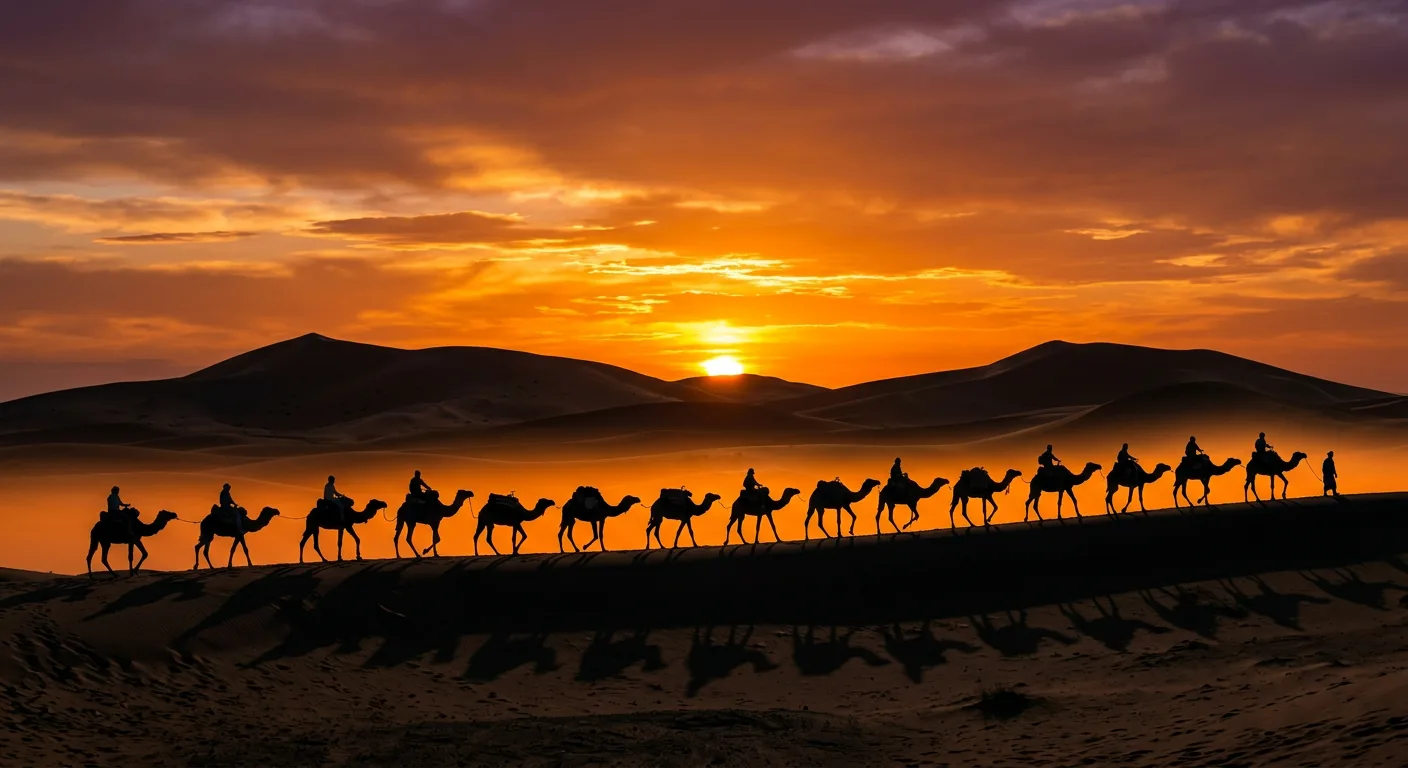
Camel Caravan Shadow on Dunes
Low Crowds
The low-angle golden hour light casts enormously elongated shadows of a camel caravan across the smooth dune surface. The shadow play creates a parallel image -- the real caravan above and its distorted shadow twin below -- that is endlessly compelling.
Best Time
Golden hour, either dawn or late afternoon for longest shadows
Camera Tip
Position yourself above the caravan route to capture both the animals and their shadows. A 70-200mm from an adjacent dune compresses the shadow-play effect. Late afternoon light from the west produces warmer tones.
Access
Arrange with desert camp operators. Communicate your positioning needs in advance.
03
Lone Dune Walker from Above
Low Crowds
A single figure walking across an immense dune field communicates scale and solitude like no other composition. The contrast between the tiny human and the vast sand landscape creates images of existential simplicity.
Best Time
Early morning or late afternoon for shadow definition
Camera Tip
Climb to a higher dune and direct your subject to walk along a clean ridge line. A 200mm or longer lens compresses the dune layers. Drone photography (if licensed in Morocco) adds an extraordinary perspective.
Access
Requires climbing to an elevated position. Bring more water than you think necessary.
04
Merzouga Lake (Seasonal)
Low Crowds
After rare rains, a shallow lake forms at the base of the dunes, sometimes attracting greater flamingos. The combination of pink flamingos, turquoise water, and orange sand dunes creates a colour composition of almost surreal beauty.
Best Time
Morning light on the water surface, after rain events (winter-spring)
Camera Tip
A 300mm or longer telephoto is essential for flamingo detail. The lake appears unpredictably after rain -- check local conditions. A polariser reveals the turquoise colour beneath surface glare.
Access
Accessible from Merzouga village. The lake location varies with rainfall.
05
Fossil Market Displays
Low Crowds
The Erfoud and Merzouga region is rich in Devonian-era marine fossils. Roadside vendors display ammonites, trilobites, and orthoceras fossils against the desert backdrop. The macro detail of 350-million-year-old marine life in the middle of the Sahara creates conceptually powerful images.
Best Time
Any time of day; controlled lighting with a reflector helps
Camera Tip
A macro lens or close-up filters reveal fossil detail. Include the desert landscape in the background for context. The polished surfaces of cut fossils respond well to reflected light.
Access
Roadside stalls and workshops along the Erfoud-Merzouga road.
06
Berber Nomad Tent Camp
Low Crowds
Traditional and semi-traditional nomadic camps on the desert fringe feature dark goat-hair tents, cooking fires, and a way of life adapted to the harshest environment. With respectful approach and permission, these camps yield intimate documentary images.
Best Time
Morning or evening when camp activity is highest
Camera Tip
A 50mm prime lens produces natural, un-intrusive compositions. Build rapport before raising the camera. Tea is almost always offered -- accept it. The warm interior light of tents creates beautiful portrait environments.
Access
Only with a local guide who has existing relationships with the families. Never approach unannounced.
07
Night Sky Over Dunes
Low Crowds
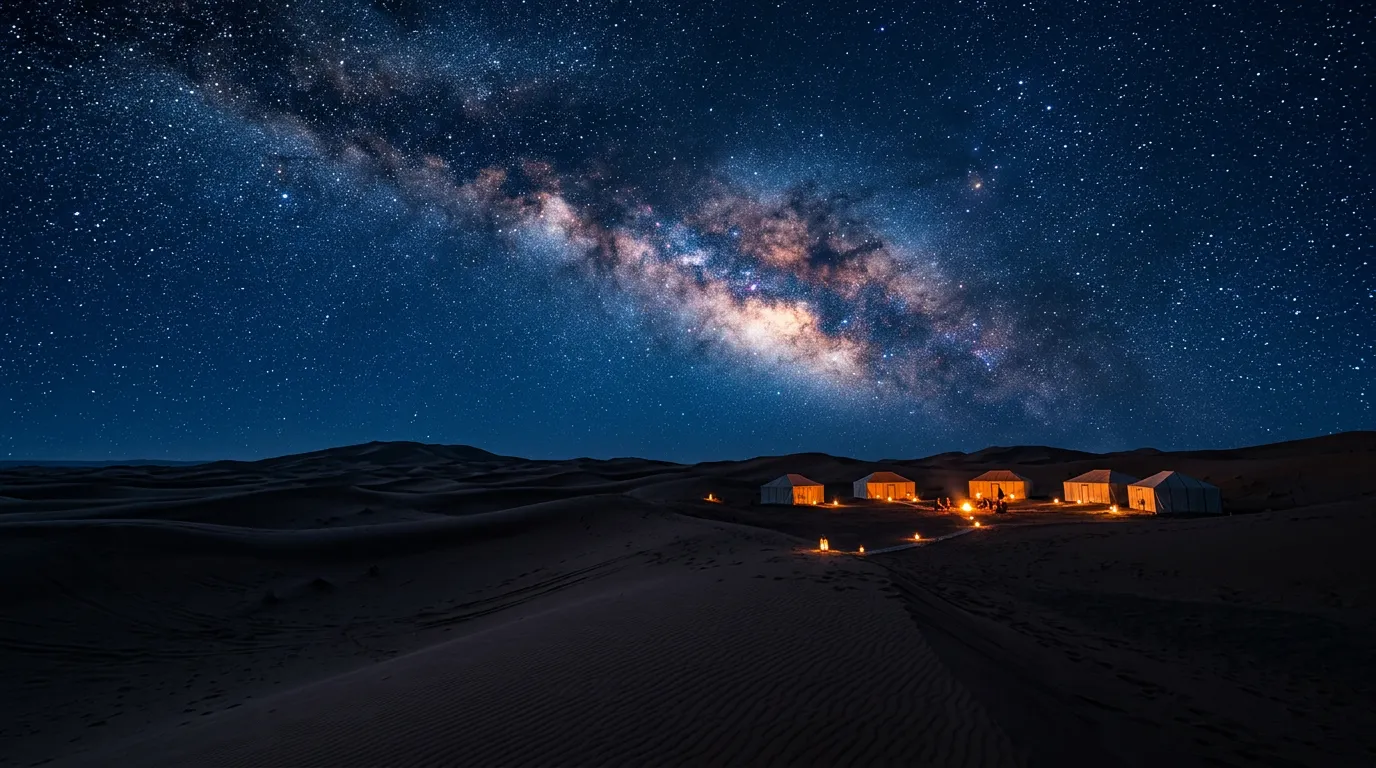
The Sahara offers some of the darkest skies in the Northern Hemisphere. The Milky Way arches overhead from horizon to horizon, and the dune silhouettes create a dramatic foreground that anchors the celestial landscape. The combination is among the finest astrophotography locations accessible without expedition-level logistics.
Best Time
Night, July through September for Milky Way core visibility. New moon essential.
Camera Tip
A 14mm or 15mm f/1.8 lens on a full-frame body captures the widest sky. 20-25 second exposures at ISO 3200-6400. A star tracker extends exposure times. Cold desert nights require spare batteries.
Access
Desert camps provide darkness. Walk 10 minutes from camp lights for cleanest skies.
08
Abandoned Kasbah Near Dunes
Low Crowds
Several crumbling earth-built kasbahs stand near the dune field, their ochre walls returning slowly to the desert from which they were built. The decay, the sand encroachment, and the dune backdrop create images of impermanence and geological time.
Best Time
Golden hour for warm light on the earthen walls
Camera Tip
A 24-70mm captures the kasbah against the dune backdrop. Include wind-drifted sand against walls for narrative detail. Exercise caution entering crumbling structures.
Access
Accessible from the Merzouga road. Ask locally for the nearest intact ruins.
09
Palm Grove Oasis Edge
Low Crowds
Where the palm groves meet the desert sand, the transition from green to orange is abrupt and visually striking. The contrast between irrigated agriculture and the Sahara creates a boundary that photographs as a powerful environmental narrative.
Best Time
Morning, when low light emphasises the green-orange boundary
Camera Tip
A 70-200mm from an elevated position compresses the transition zone. Include a figure at the boundary for scale. The strongest compositions show the palms as a wall against the advancing sand.
Access
The Merzouga palm grove is accessible by road.
10
Dune Texture Abstract
Low Crowds
At close range, wind-sculpted sand reveals patterns of extraordinary delicacy -- ripple lines, crescent ridges, and shadow gradients that change with every breath of wind. These abstract macro compositions turn sand into an art medium.
Best Time
Low-angle light at dawn or dusk when ripple shadows are sharpest
Camera Tip
A 100mm macro or a 70-200mm at close range. Get low to the sand surface. The shadow angle is everything -- adjust position by centimetres to find the most graphic pattern.
Access
Any dune surface. Walk carefully to preserve undisturbed sand in front of your shooting position.
11
Blue-Robed Tuareg with Camel
Low Crowds
The indigo-dyed robes of Saharan Tuareg men photograph with extraordinary intensity against the orange sand. With advance permission and respectful engagement, a portrait of a traditionally dressed Tuareg man with his camel captures a way of life that stretches back centuries.
Best Time
Golden hour for warm skin tones and vivid blue fabric
Camera Tip
An 85mm portrait lens produces flattering perspective. Discuss the session in advance and agree on compensation. The contrast between blue fabric and orange sand is the composition.
Access
Only with explicit permission. Arrange through desert camp operators or guides.
12
Desert Sunset from the Highest Dune
Moderate Crowds
Climbing to the top of the tallest Erg Chebbi dune provides a 360-degree panorama of the desert turning from gold to crimson to violet as the sun sinks below the western horizon. Fellow visitors on lower dunes become tiny silhouettes that communicate the immense scale.
Best Time
Sunset, arrive 45 minutes before for the climb and positioning
Camera Tip
A wide-angle lens captures the full panoramic sweep. A telephoto isolates individual figures on distant dunes. Protect equipment from blowing sand on the exposed ridge.
Access
The climb takes 30-45 minutes depending on fitness. Soft sand makes the ascent strenuous.
8 Locations
Atlas Mountains
The High Atlas rises to over 4,000 metres and divides Morocco into Mediterranean north and Saharan south. The mountain landscapes span from sub-alpine meadows to dramatic gorges, and the Berber villages clinging to terraced slopes offer a way of life unchanged for centuries.
01
Ait Benhaddou at Golden Hour
High Crowds
The UNESCO World Heritage ksar of mud-brick towers rises above the Ounila River bed. The west-facing facade receives direct sunset light, turning the clay walls from ochre to deep gold to crimson. This is arguably the single most photographed architectural site in Morocco.
Best Time
Sunset, final 30 minutes of light when the west facade ignites
Camera Tip
Cross the river to the opposite bank for the classic full-frontal composition. A 70-200mm isolates individual towers. A wide-angle from within the village captures the interior alleyways and stairways.
Access
Free exterior access. Small fee for guided interior tours. The river crossing uses stepping stones or, at high water, local donkeys.
02
Gorges du Dades (Winding Road)
Moderate Crowds
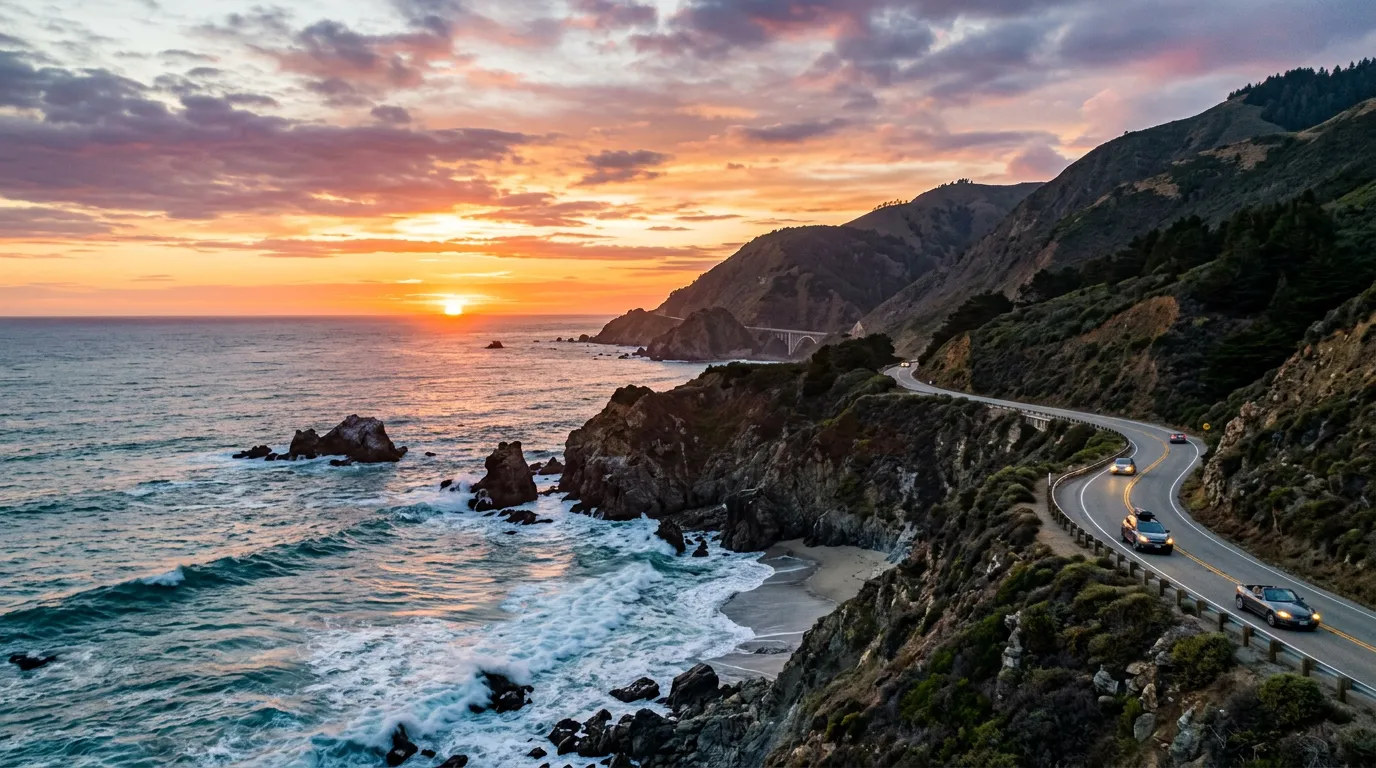
The road through the Dades Gorge climbs through a series of dramatic hairpin bends carved into red-brown rock. The switchbacks, seen from above, create a graphic serpentine pattern that is one of the most striking road photographs in North Africa.
Best Time
Morning, when eastern light rakes across the canyon walls
Camera Tip
The classic viewpoint is on the eastern rim above the hairpins. A 24-70mm captures the full road pattern. Include a vehicle on the road for scale. The red rock glows intensely in the first hour of sunlight.
Access
Accessible by road from Boumalne Dades. The viewpoint requires a short scramble from the road.
03
Gorges du Todra (Dawn Light Beam)
Moderate Crowds
The narrowest point of the Todra Gorge features vertical granite walls rising 300 metres on each side, separated by only 10 metres at the base. At dawn, a beam of direct sunlight enters the canyon from the east, illuminating the river and one rock face while the opposite wall remains in deep shadow.
Best Time
Dawn, approximately 7:00-8:00 AM when the light beam enters the gorge
Camera Tip
A 16-35mm wide-angle captures the full height of the walls. HDR bracketing handles the extreme contrast between sunlit and shadowed walls. A polariser deepens the blue sky visible at the top of the gorge.
Access
Drive from Tinghir (15 km). The gorge narrows to pedestrian width at the most dramatic point.
04
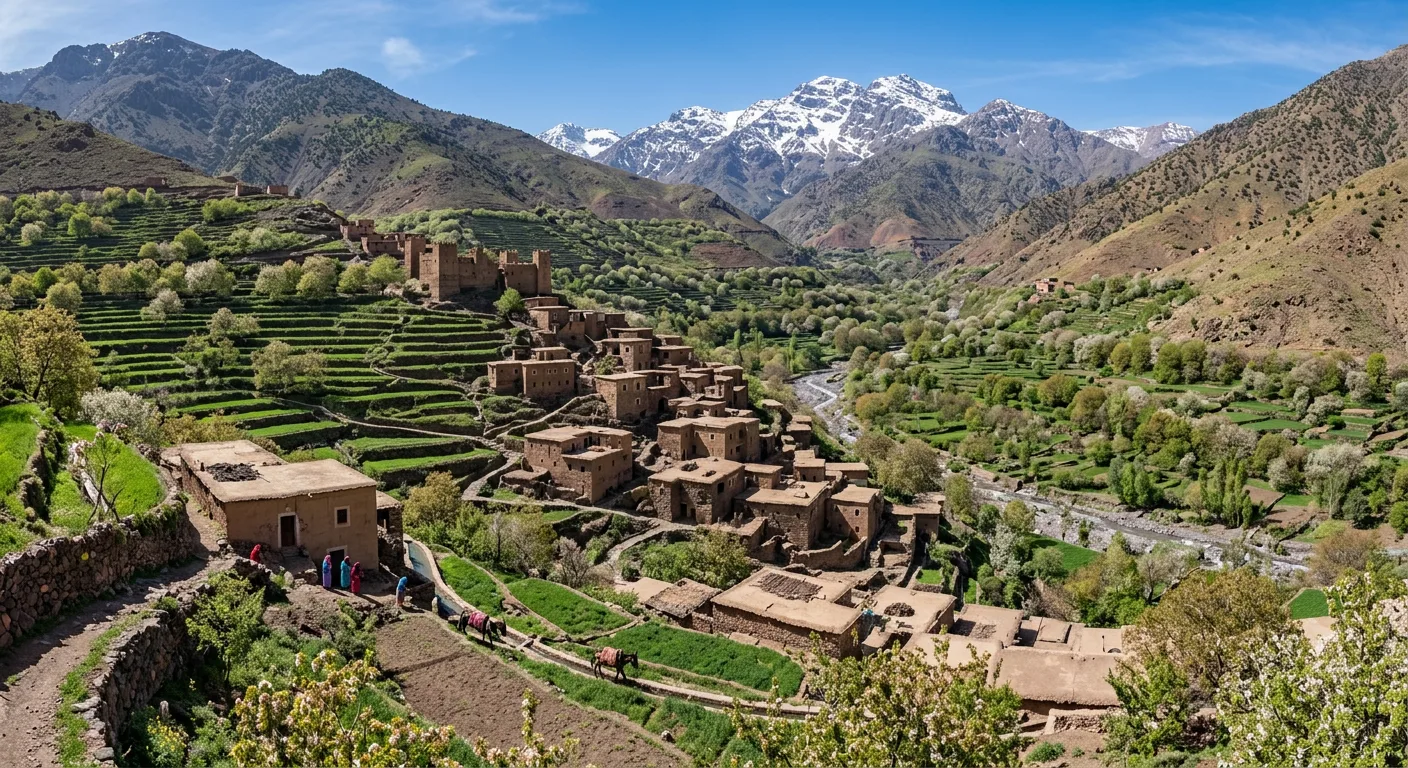
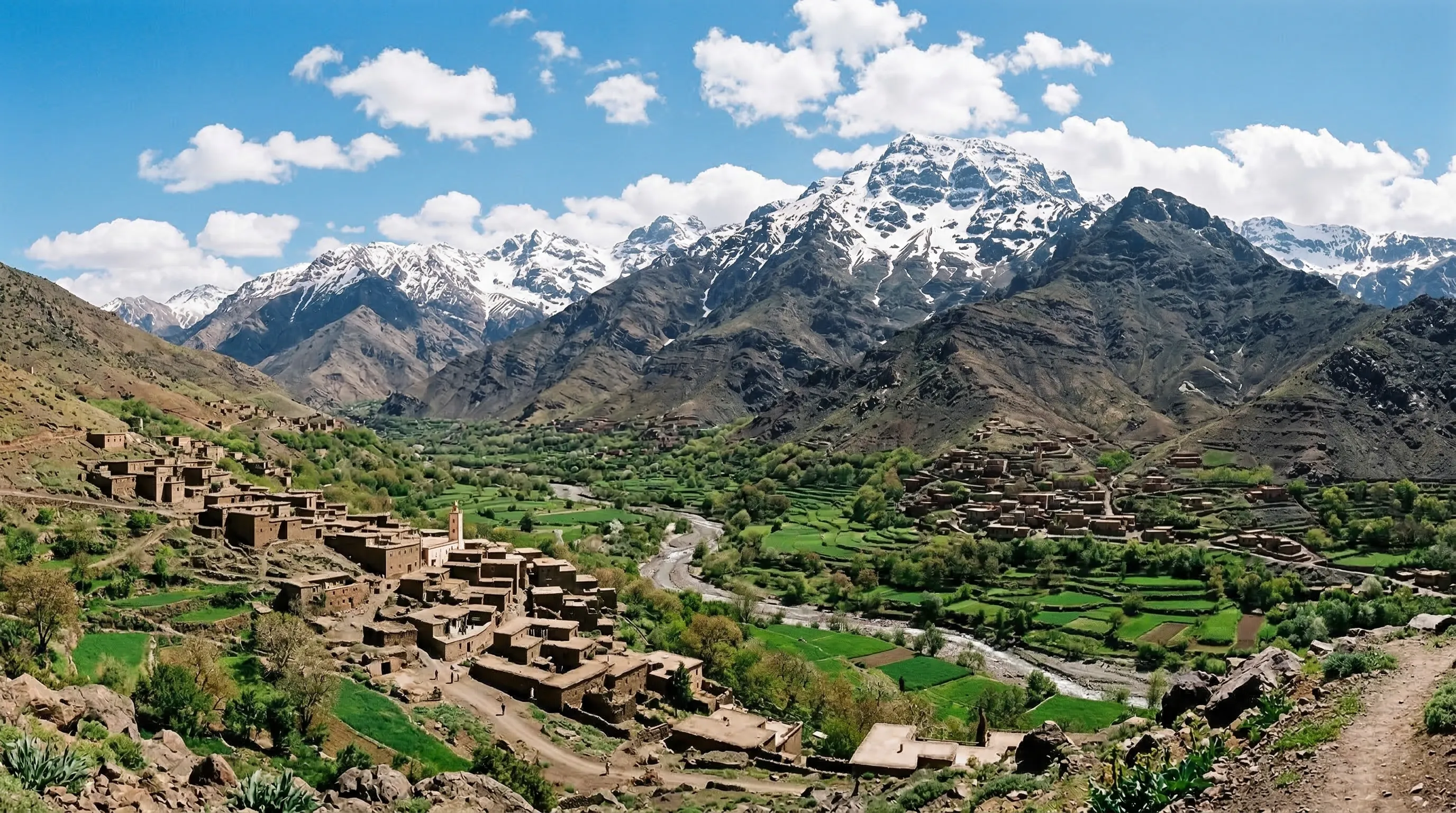
Berber Village Terraced Fields
Low Crowds
High Atlas villages are built on terraced slopes where walnut, almond, and barley fields create geometric green patterns in spring and golden patterns in summer-autumn. The contrast between stone village architecture and agricultural geometry produces images of remarkable order.
Best Time
Morning for soft, directional light across the terraces
Camera Tip
A 70-200mm compresses the terraced layers. Spring green (March-May) contrasts with golden harvest tones (August-September). Include a figure working the fields for narrative and scale.
Access
Accessible from Imlil, Ourika Valley, or Ait Bouguemez. A local guide enhances cultural access.
05
Cascades d'Ouzoud
High Crowds
Morocco's most spectacular waterfall is a triple cascade dropping over 100 metres into a natural pool. At midday, a rainbow forms in the spray at the base. Barbary macaques inhabit the surrounding olive groves and occasionally appear near the falls.
Best Time
Midday for the rainbow in the spray; morning for softer, directional light
Camera Tip
A 1-2 second exposure with ND filter creates the classic silky water effect. The rainbow appears between 11:00 AM and 2:00 PM. A 70-200mm from the lower viewing platform isolates the main cascade.
Access
Two-hour drive from Marrakech. Steps lead to the base viewing platforms. Ticketed entry.
06
Imlil Valley (Toubkal Approach)
Moderate Crowds
The gateway to Jebel Toubkal, North Africa's highest peak, Imlil sits in a verdant valley of walnut groves, terraced fields, and stone villages. Snow-capped peaks provide a year-round backdrop, and the almond blossom in February-March creates a fleeting layer of pink and white.
Best Time
Morning for clear mountain visibility; February-March for almond blossom
Camera Tip
A 70-200mm compresses the layered valley. A polariser intensifies the sky against white peaks. In almond blossom season, a 100mm macro captures individual flower detail against mountain backdrop.
Access
Ninety-minute drive from Marrakech. The village is the trailhead for Toubkal ascents.
07
Tizi n'Tichka Pass
Low Crowds
The highest paved road in North Africa crosses the Atlas at 2,260 metres through a series of hairpin bends. The road itself, snaking through barren mountain landscape, creates dramatic graphic compositions. In winter, snow dusts the peaks on either side.
Best Time
Morning for clear mountain views; winter for snow on peaks
Camera Tip
Stop at the numerous pullouts for panoramic views. A 24mm wide-angle captures the road and mountain sweep together. The road curves create strong leading lines.
Access
Main road between Marrakech and Ouarzazate. Multiple pullouts for photography.
08
Tin Mal Mosque
Low Crowds
This remote 12th-century Almohad mosque, deep in the High Atlas south of Marrakech, is one of only two mosques in Morocco that non-Muslims may enter. The partially ruined structure -- open to the sky, with crumbling arches and weathered stone -- has an atmospheric intensity unlike any other religious site in the country.
Best Time
Morning or late afternoon for directional light through the open roof
Camera Tip
A 16-35mm wide-angle captures the roofless interior. The light entering from above creates dramatic pools of illumination. The remote setting means few visitors and extended shooting time.
Access
Remote location, approximately two hours south of Marrakech via the Tizi n'Test road. Verify opening hours locally.
5 Locations
Essaouira
The Atlantic wind city combines 18th-century Portuguese fortifications, blue fishing boats, swooping seagulls, and a white medina that shimmers in the coastal light. The constant Alizee trade wind adds movement and energy to every frame.
01
Ramparts at Sunset with Cannons
Moderate Crowds
The 18th-century Portuguese-built sea walls mount a row of bronze and iron cannons facing the Atlantic. At sunset, the cannons silhouette against the flaming western sky while waves crash against the rocks below. Seagulls wheel in the updrafts along the walls.
Best Time
Sunset, 30 minutes before through blue hour
Camera Tip
A 24mm wide-angle captures multiple cannons and sky. A 70-200mm isolates individual cannon silhouettes against sunset colour. The wind is constant -- brace yourself and your tripod firmly.
Access
Free public walkway along the Skala de la Kasbah ramparts.
02
Blue Fishing Boats in Harbour
Moderate Crowds
The working harbour is packed with blue-painted wooden fishing boats in every state of repair. Fishermen mend nets, unload catches, and build new hulls. The concentrated blue of the boats against white medina walls and the warm tones of weathered wood creates a Mediterranean colour palette.
Best Time
Morning, 7:00-9:00 AM when fishermen return with the catch
Camera Tip
A 50mm gives a natural perspective. The morning fish market inside the port is frenetically active. A fast lens (f/1.8) handles the dim interior light of the market stalls.
Access
Open harbour area. The fish market is freely accessible.
03
Skala de la Ville Sea View
Moderate Crowds
The inland rampart walkway provides elevated views through cannon embrasures toward the sea and the nearby Ile de Mogador. The stone embrasures create natural framing devices, and the combination of aged stonework, sea spray, and distant islands produces atmospheric compositions.
Best Time
Afternoon, when western light enters the embrasures and illuminates the stone
Camera Tip
Use the cannon embrasures as natural frames. A wide-angle from inside the embrasure looking out creates powerful framing. Protect lenses from salt spray in high winds.
Access
Ticketed entry to the Skala de la Ville walkway. Photography freely permitted.
04
Seagulls Over Medina Walls
Low Crowds
Hundreds of seagulls circle above the white medina walls and the fish market area. Their flight patterns against the blue sky, white buildings, and crashing sea create dynamic action images that capture the constant energy of this wind-driven city.
Best Time
Morning when fish market activity draws the most birds
Camera Tip
A 70-200mm tracks individual birds in flight. Fast shutter speed (1/2000s or above) freezes wing detail. Continuous autofocus is essential. The white buildings provide clean backgrounds for flight silhouettes.
Access
Anywhere along the harbour and ramparts offers seagull photography.
05
Gnawa Musicians at Place Moulay Hassan
High Crowds
The main square hosts Gnawa musicians year-round, especially in the late afternoon and evening. The musicians in their traditional tasselled hats and colourful robes perform with the guembri and krakeb, creating images rich in cultural narrative and movement.
Best Time
Late afternoon to evening for performance activity
Camera Tip
An 85mm portrait lens captures individual musicians. Ask permission before close-up portraits. A donation is expected. The Gnawa Festival in June brings hundreds of musicians to the streets.
Access
Open public square. Musicians expect a donation if photographed at close range.
5 Locations
Casablanca
Morocco's economic capital offers a distinctly different photographic experience: the monumental Hassan II Mosque, French colonial art deco architecture, and a contemporary urban energy that contrasts with the medieval character of the imperial cities.
01
Hassan II Mosque at Sunset Over Atlantic
Moderate Crowds
Built directly over the ocean on a promontory, the Hassan II Mosque features the world's tallest minaret at 210 metres. At sunset, the pale stone and green-tiled roof glow against the Atlantic. Waves crash against the rocks below while the structure rises in monumental scale above.
Best Time
Sunset, shooting from the southern promenade or beach
Camera Tip
A 24mm wide-angle captures mosque and ocean together. A 200mm from the southern beach compresses the building against a sunset sky. Long exposure (2-4 seconds) smooths the Atlantic waves into mist.
Access
Exterior free to access. Interior open to non-Muslims via guided tours (outside prayer times).
02
Hassan II Mosque Interior
Moderate Crowds
One of the very few mosques in Morocco that non-Muslims may enter. The interior is a vast space of carved cedar, painted zellige, and a retractable roof that opens to the sky. The scale is breathtaking, and the filtered light through stained glass and carved screens creates complex shadow patterns.
Best Time
Guided tour times (check locally). Midday when the retractable roof may be open.
Camera Tip
A 16mm or wider ultra-wide captures the cavernous interior. The HDR contrast between bright windows and dark marble is extreme -- bracket exposures. No tripods permitted on tours.
Access
Guided tours for non-Muslims available at set times. Ticketed entry. Photography permitted.
03
Art Deco Buildings in Downtown
Low Crowds
Casablanca possesses one of the finest concentrations of art deco architecture outside Miami and the French Riviera. Built during the French Protectorate era (1912-1956), these buildings feature geometric facades, ornate ironwork balconies, and decorative tiling that blends European modernism with Moroccan ornament.
Best Time
Morning for facades facing east; afternoon for west-facing. Overcast light shows detail.
Camera Tip
Look along Boulevard Mohammed V, Rue du Prince Moulay Abdellah, and Place des Nations Unies for the densest concentration. A 35mm lens captures full facades on narrow streets. Shoot upward to isolate rooflines against sky.
Access
Public streets. The Casablanca Heritage Foundation offers architectural walking tours.
04
Ain Diab Corniche at Golden Hour
Moderate Crowds
The beachfront promenade stretches along the Atlantic shoreline, with surfers, joggers, and families creating a lively foreground against the ocean and the distant mosque silhouette. Golden hour turns the wet sand and sea spray into sheets of reflected light.
Best Time
Golden hour through sunset, facing west along the shoreline
Camera Tip
A 70-200mm compresses figures against the sunset-lit ocean. The wet sand at low tide creates mirror reflections. Include surfers or joggers for dynamic silhouettes.
Access
Public corniche and beach. Freely accessible.
05
Old Medina Gate (Bab Marrakech)
Moderate Crowds
The main entrance to Casablanca's relatively small old medina provides a threshold between the modern city and the traditional market quarter. The gate itself, flanked by white walls, creates a compositional frame through which the medina interior is visible.
Best Time
Morning for active market scenes through the gate
Camera Tip
Use the gate arch as a frame for the medina beyond. A 35mm or 50mm lens provides natural perspective. The contrast between the modern city behind you and the medina through the gate tells a story of two Casablancas.
Access
Open public gate and medina streets.

Before You Go
Practical Planning Notes
Timing is Everything
The single most important variable in Moroccan photography is the time of day. The difference between a location shot at midday and the same location shot at golden hour is not incremental -- it is transformational. Plan your daily schedule around the light, not around convenience. This often means pre-dawn starts and late-evening finishes, with a midday rest during the harshest hours.
Access and Permissions
Many of the best shooting positions require local knowledge and relationships. A guide who understands photography can negotiate rooftop access, introduce you to artisans willing to be photographed, and navigate cultural protocols that would be invisible to an unaccompanied visitor. Professional photography permits are required at certain heritage sites and can be arranged in advance.
Equipment Protection
Morocco subjects camera equipment to desert dust, sea spray, extreme heat, and the jostling of crowded medina alleyways. Weather-sealed bodies and lenses are strongly recommended. Carry sensor cleaning supplies and use them daily. Protective filters on lens front elements are cheap insurance. In the Sahara, change lenses inside a large plastic bag to minimise dust exposure.
Cultural Sensitivity
Always ask permission before photographing people, especially women and children. Many Moroccans are proud to be photographed and will pose happily; others prefer not to be. A small gesture of appreciation (5-10 MAD) is customary for portrait subjects, performers, and artisans. Avoid photographing near mosques during prayer times, military installations, and police checkpoints.
Drone Photography
Drone regulations in Morocco require prior authorisation from the Direction Generale de l'Aviation Civile (DGAC). Flying without a permit can result in drone confiscation and fines. The application process takes several weeks. Drones are prohibited near airports, military areas, royal palaces, and densely populated urban zones including all medinas. If drone footage is a priority, apply well in advance and carry the authorisation document at all times.
Continue Exploring
Photography Tours
Private guided tours, workshops, and group expeditions designed around optimal light and access.
Photography Masterclass
Technical workshops covering composition, light, street photography, and post-processing.
All Tours
Browse our full range of luxury tours across Morocco, many of which visit the locations in this guide.
Your Photographer's Guide Awaits
Let Us Take You to Every Shot
Our photography guides know these locations intimately -- every angle, every light condition, every access point. They have spent years building relationships with the people and places in this guide. Tell us what you want to photograph, and we will build the itinerary around the light.
Fifty Locations. Seven Regions. One Country.
Morocco offers more photographic variety per square kilometre than almost any destination on Earth. This guide is your starting point.
Start Planning