Complete Photography Masterclass
Morocco Photography
Masterclass
Morocco is one of the world's great photography destinations. Ancient medinas, vast Sahara, Atlas mountain villages, Atlantic coastlines, the blue city of Chefchaouen. Every surface, every light condition, every human encounter is a potential image.
This is the complete guide -- locations by city, light conditions, camera settings, ethical portrait photography, gear recommendations, and the hidden spots that most visitors never find.
Understanding the Light
Morocco's Unique Light Conditions
The quality of light is the first thing every photographer notices about Morocco. Understanding how it behaves across different times of day and environments is the foundation of making strong images here.
Desert Light Quality
The Sahara sand filters and diffuses light differently than temperate zones. Colors are warmer, shadows sharper, midday contrast extreme. The warm wavelengths scattered by airborne sand particles create what professionals call "hero light" -- a quality of golden illumination that turns clay kasbahs and dune ridges into burnished metal.
Golden Hour
Longer and more dramatic than in Europe or North America. Expect 45-75 minutes of extraordinary soft light after sunrise and before sunset. The low angle of the sun at Moroccan latitudes extends this window significantly, particularly in winter months when the sun barely climbs above 40 degrees even at midday.
Blue Hour
The 20-30 minutes before sunrise and after sunset. Medinas turn extraordinary blue-grey. The ambient light is perfectly balanced with any artificial lighting -- lanterns, shop fronts, street lamps -- creating a magical window for architectural and street photography that rewards patient preparation.
Midday Light
Generally harsh, flat, and unflattering for portraits. The overhead sun eliminates shadow detail and creates deep, unfillable shadows under hats, doorways, and arches. However, midday is excellent for geometric architecture -- zellige tilework, shadow patterns from lattice screens, and the stark geometry of minarets against blue sky.
Ramadan Evenings
The medina after iftar (the breaking of the Ramadan fast) is one of the most atmospheric times to photograph Morocco. Streets fill suddenly with families, food vendors set up under warm lights, and the atmosphere shifts from the quiet restraint of the fasting day to celebratory energy. An extraordinary window for street photography.
Best Locations by City
Marrakech
The Red City. Morocco's most photographed destination -- and for good reason. The density of color, texture, and human activity per square meter is unmatched.
01
Djemaa el-Fna at Dusk
The square from above (cafe terraces) shows the whole theatrical transformation from daytime marketplace to evening spectacle. Snake charmers, storytellers, food stalls materializing from nothing, clouds of grilling smoke lit from beneath.
02
Souk Semmarine
The overhead lattice creates dappled light patterns on goods and people. These shafts of light piercing the reed canopy are among the most dramatic natural lighting conditions available to any street photographer anywhere in the world.
03
The Dyers' Souk (Souk des Teinturiers)
Colorful wool hanging in brilliant skeins over the narrow alleyway, vats of vivid dye below. Best morning light, 8-10am, when the sun angles through the eastern openings and illuminates the hanging wool from behind.
04
Bahia Palace Courtyards
Zellige geometry in every direction. The courtyards need overcast sky or golden hour to avoid harsh shadows that obliterate the subtle relief of carved stucco and painted cedar. Patience with cloud cover is rewarded here.
05
El Badi Palace
The storks (present spring through summer nesting on the ruined walls), the vast empty courtyard, the crumbling rammed-earth walls against sky. A study in texture, scale, and the passage of time.
06
Bab Agnaou Gate
One of the most ornate city gates in Morocco. The carved Almohad stonework is best photographed in morning light when the sun rakes across the relief carving, revealing every chisel mark and geometric pattern.
Fes
The intellectual and spiritual heart of Morocco. The medina of Fes el-Bali is the largest car-free urban area in the world -- a living medieval city that rewards patient, observant photographers.
01
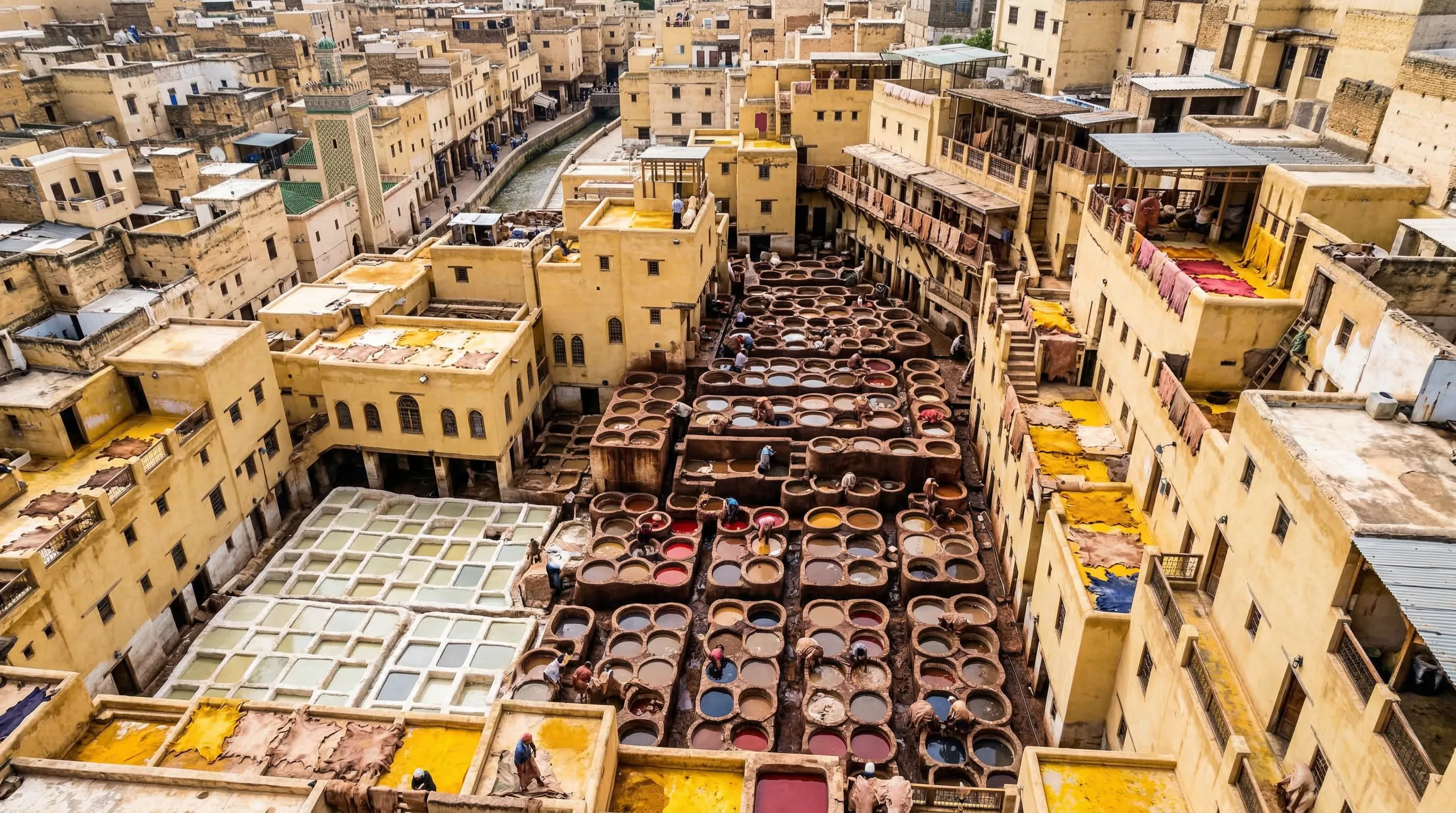
Chouara Tannery
From the leather shop balconies above. Early morning before tourist crowds arrive and before the heat intensifies the smell. The patchwork of dyeing vats in saffron, poppy red, and cobalt blue creates an abstract color study from above.
02
Bou Inania Madrasa
The courtyard's carved stucco and zellige tilework. Overcast conditions are ideal -- they eliminate the harsh shadows that destroy the subtle relief of carved plaster and painted wood. The marble floor reflects soft light upward.
03
The Blue Gate (Bab Bou Jeloud)
Dawn, when the medina first stirs. The gate faces west, so morning light illuminates the eastern (blue-tiled) face. Watch for figures passing through the archway -- silhouettes against the bright medina interior create powerful compositions.
04
Rcif Square
Authentic daily life. Less photographed than any of the famous landmarks. More human. Vegetable sellers, butchers, craftspeople heading to work. The real Fes, unperformed for tourists.
05
The Rooftops
Fes medina from above -- a sea of terracotta broken by minarets and satellite dishes. Find access through your riad host. Many riad owners know the best viewpoints and can arrange access to neighboring terraces for a wider panorama.
Chefchaouen
The Blue Pearl of Morocco. An entire medina painted in shades of cobalt, cerulean, and periwinkle -- a visual phenomenon unique in the world.
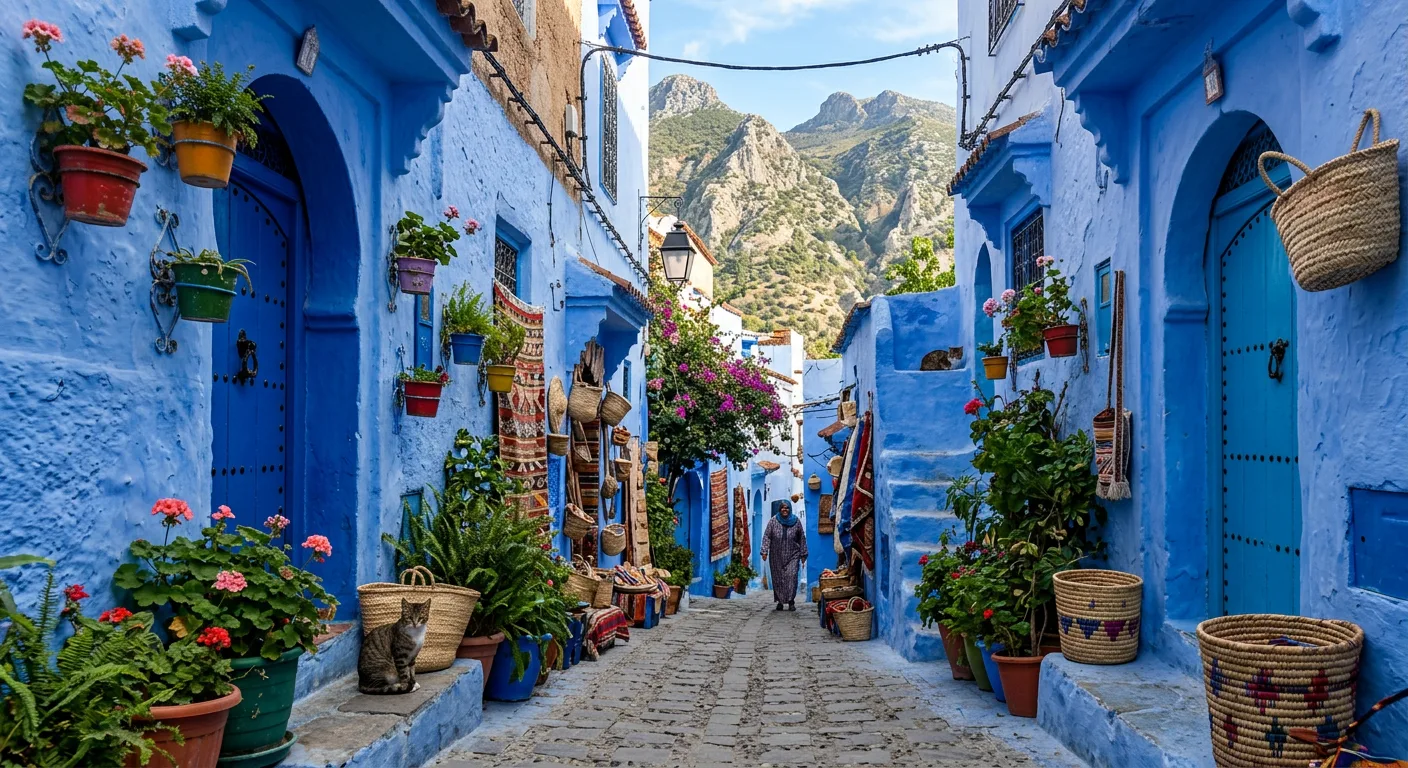
The Blue Streets
Early morning (6-8am) before tourists arrive. Light is golden on blue. The narrow alleyways become studies in monochrome blue punctuated by terracotta flower pots, sleeping cats, and shafts of warm light from the eastern sky.
Plaza Uta el-Hammam
The kasbah and mosque with cafe terraces providing elevated viewpoints. The square is the social center of Chefchaouen and rewards patient observation with unposed human moments.
The Stairways
The medina's blue stairways leading upward to the hills. These are among the most photographed elements of Chefchaouen and for good reason -- the combination of blue paint, worn stone steps, and overhead light creates naturally composed images.
Lookout Hill (Spanish Mosque Area)
Chefchaouen from above at sunset. The entire blue medina spreads below against the Rif Mountains. Arrive 30 minutes before sunset for the full color transition from warm gold to cool blue.
The Sahara (Merzouga / Erg Chebbi)
The Sahara is where photography becomes primal -- pure light, pure form, pure color. No distractions. Just sand, sky, and the interplay between them.
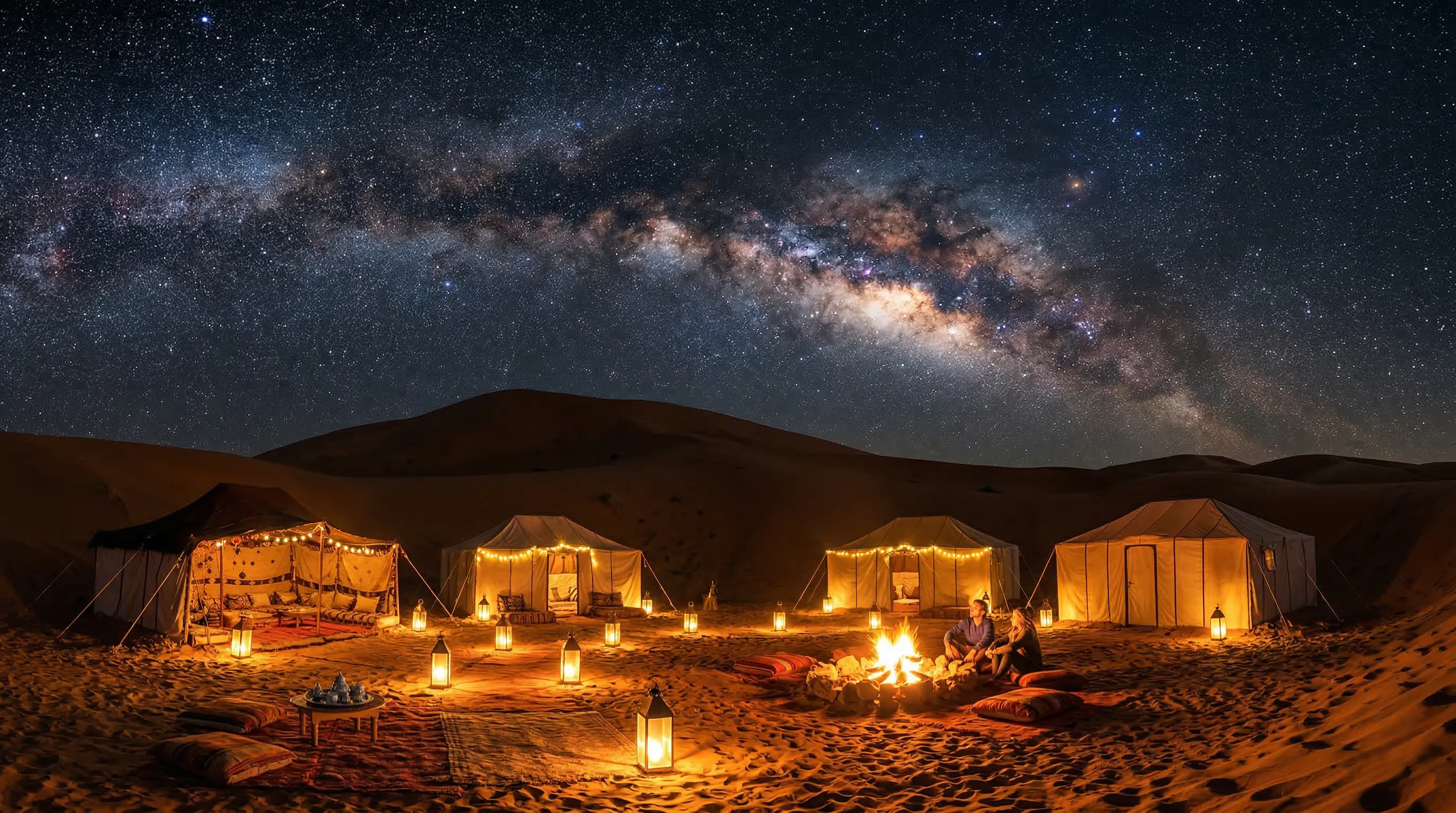
Star Photography at Merzouga
Merzouga is one of the world's finest locations for astrophotography. Minimal light pollution in any direction. The Milky Way is clearly visible October through March. The dune silhouettes against the star field create compositions that are genuinely difficult to achieve elsewhere.
Sunrise at the Dunes
The shadow-light interplay on sand is extraordinary at first light. Every ripple casts a shadow. The dune ridges become sharp lines of contrast. The color shifts from deep purple through amber to gold within thirty minutes.
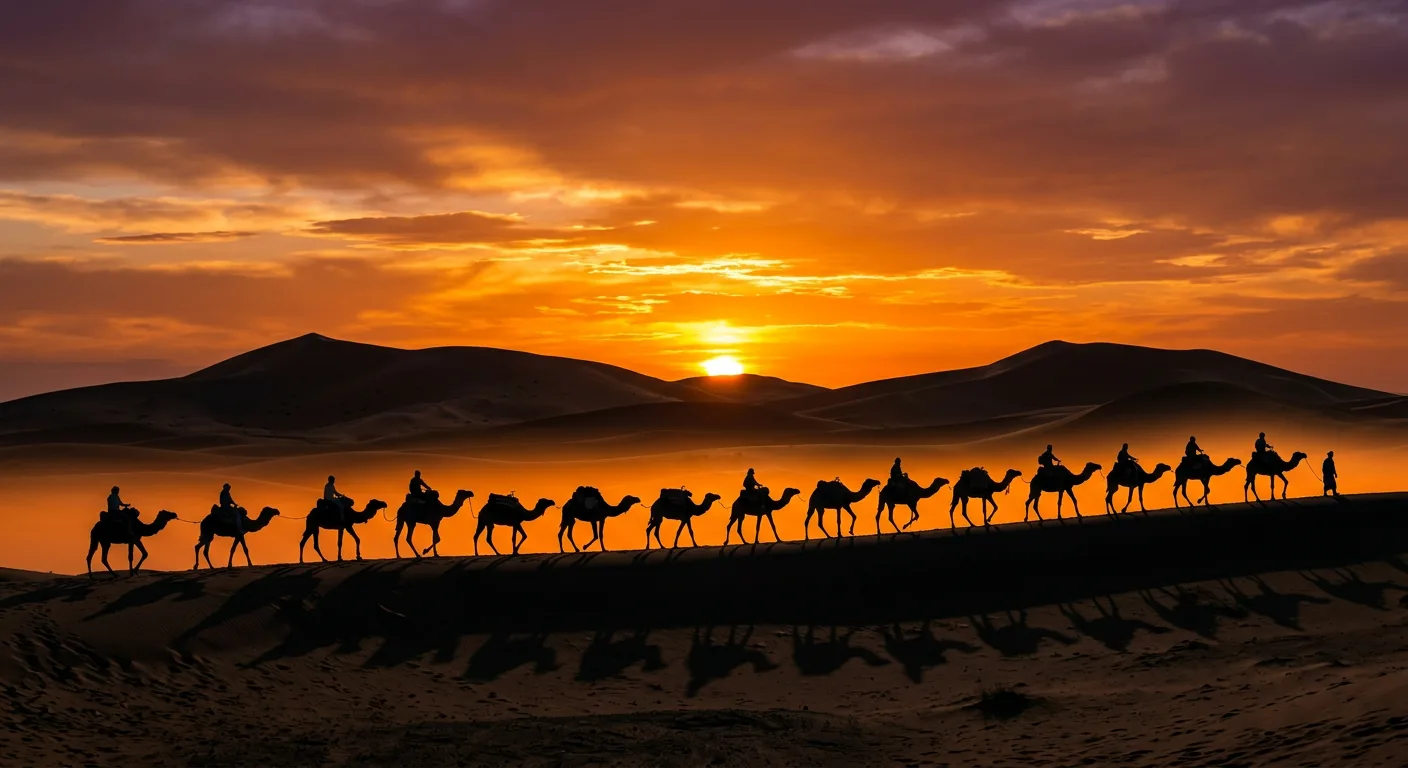
Camel Caravans at Golden Hour
Silhouettes of camel trains against orange sand. The long shadows of camels and their riders stretching across the dune faces create one of the most iconic images in all of travel photography.
Desert Villages of the Draa Valley
The adobe buildings catch morning light beautifully. The Draa Valley south of Ouarzazate contains some of Morocco's most photogenic kasbahs and ksour, many still inhabited, set against palm groves and barren hillsides.
Essaouira
Morocco's Atlantic jewel. Wind, sea spray, white architecture, blue boats, and the softest natural light on the Moroccan coast.
The Port and Blue Boats
Morning, before the boats leave. The blue wooden fishing boats packed together in the harbor, fishermen mending nets, seagulls circling overhead. A classic documentary photography subject.
The Ramparts (Skala)
Bronze cannons pointing to the Atlantic. Sunset. The 18th-century Portuguese fortifications provide clean architectural lines against the sea and sky. The cannons create strong foreground elements.
The Medina Entrance and Main Street
Clean architecture, less chaotic than Marrakech. Essaouira's medina is more ordered, more architectural, and the Atlantic light is softer and more diffused than interior Morocco.
Windsurfers on the Beach
The constant Atlantic wind that gives Essaouira its character also creates action photography opportunities. Kite surfers and windsurfers against the dramatic sky make for dynamic compositions.
Ethics and Respect
The Ethics of Portrait Photography
Morocco is a hospitable country, but photographing people carries cultural responsibilities. These principles are not optional courtesies -- they are the foundation of ethical practice in a culture where privacy and dignity are deeply valued.
Always ask before photographing people
Essential"Wash ymkn liya nswwr?" (Can I photograph you?) -- this phrase in Moroccan Darija, however imperfectly pronounced, demonstrates respect and nearly always receives a warmer response than a wordless camera aimed at a stranger.
Respect refusals completely
EssentialSome people will decline. This is not negotiable. Lower your camera immediately, smile, and move on. Pressing the point after a refusal is considered deeply disrespectful in Moroccan culture.
Payment for posed portraits
Some people will ask for money if they pose for you. This is a fair exchange. 5-10 MAD is appropriate for a casual portrait. Agree on the amount before shooting, not after.
Never photograph women without explicit permission
EssentialThis is a firm cultural boundary in Morocco. Many women, particularly in conservative areas and rural villages, do not wish to be photographed. Photographing them without consent can create genuine distress and anger from family members.
Djemaa el-Fna performers expect payment
The snake charmers, henna artists, and musicians of Marrakech's great square are performing for a living. If you photograph them close-up, they will expect payment. 10-20 MAD is the established norm. Negotiate before shooting.
Children require parental permission
EssentialBe especially careful photographing children. Parents' permission is always required. In practice, this means identifying and speaking with a parent before raising your camera, not seeking forgiveness afterward.
Private homes are never acceptable subjects
EssentialPhotographing into private homes through open doors or windows is never acceptable. The medina's narrow streets and low windows make this a real temptation, but it is a serious violation of privacy in a culture that values domestic seclusion.
Technical Reference
Camera Settings for Morocco
Starting points for each major shooting environment. Adjust based on your specific equipment, creative intent, and the conditions of the moment.
| Condition | Settings |
|---|---|
| Bright Sunlight | ISO 100, f/8-f/11, 1/500s |
| Souk Interiors (Mixed/Dim) | ISO 800-3200, f/2.8-f/4, 1/60-1/125s |
| Sahara Sunrise | Bracket exposures (-2, 0, +2 EV) |
| Night Medina | ISO 3200-6400, f/1.8-f/2.8, 1/30-1/60s |
| Star Photography | ISO 3200, f/2.8, 20-25 second exposures |
Bright Sunlight
Reduce exposure to protect highlights. The Sahara and desert surfaces reflect enormous amounts of light. Use a lens hood to prevent flare.
Souk Interiors (Mixed/Dim)
The covered souks range from near-darkness to brilliant shafts of sunlight. Auto-ISO with a minimum shutter speed of 1/60s is a practical approach.
Sahara Sunrise
The dynamic range is extreme -- brilliant sky above, deep shadow in dune valleys. Bracket extensively and blend in post-processing, or expose for highlights and lift shadows.
Night Medina
Handheld limit. A fast prime lens (35mm or 50mm f/1.8) is essential for night medina photography. Image stabilization extends the usable shutter speed range.
Star Photography
Wide-angle lens required. Use the 500 rule (500 divided by focal length = maximum exposure time before stars trail). A sturdy tripod is non-negotiable.
Equipment
Gear Recommendations
Morocco's environments are demanding on equipment. Dust, heat, sea spray, and crowds each present specific challenges. Preparation prevents equipment failure at the worst possible moment.
Dust Protection
The Sahara will put dust everywhere. Bring a dedicated dust brush and blower. Seal your camera bag when not actively shooting. Sensor cleaning kits with swabs are essential for multi-day desert trips. Change lenses inside your bag, never in open air.
Heat Management
Batteries drain faster in extreme heat. Carry at least double your usual battery supply. Keep spare batteries in an insulated pouch. Never leave camera equipment in direct sun -- internal temperatures can damage sensors and LCD screens.
Lens Selection
Wide zoom (16-35mm) for architecture and desert landscapes. Standard zoom (24-70mm) as your workhorse for general travel and documentary work. An 85mm f/1.8 for portraits -- this focal length provides flattering perspective and sufficient working distance for respectful street portraiture.
Drone Regulations
Morocco requires a permit to fly drones. The application process involves the Moroccan Civil Aviation Authority (Direction Generale de l'Aviation Civile) and is bureaucratic. Research current regulations before traveling with a drone. Unauthorized drone flights can result in equipment confiscation and legal consequences.
ND Filters
Essential for long-exposure water photography at the Essaouira coast and Ouzoud waterfalls. A 6-stop or 10-stop ND filter transforms crashing Atlantic waves into smooth mist and cascading waterfalls into silk. Also useful for blurring crowd movement in busy market scenes.
Off the Beaten Path
Hidden Photo Spots
Legitimately off-the-beaten-path locations that produce extraordinary images without the crowds found at Morocco's most famous viewpoints.
01
Fes Tannery from the Hill Above
Not the leather shop balconies below (where every tourist goes) but the higher viewing point on the hill above. Ask locally for directions -- riad owners and guides in the Fes medina know this vantage point. The elevated perspective reveals the full scale of the tannery operation.
02
Moulay Idriss Zerhoun
The holy city near Meknes. Less visited than any major Moroccan city. Extraordinary light on the white and green buildings cascading down the hillside. The town has only recently opened to overnight visitors and retains an authenticity that the more famous destinations have partially lost.
03
Skoura Oasis
Palm groves and kasbahs west of Ouarzazate. Almost no tourists. The combination of ancient kasbahs, dense palm plantations, and distant Atlas peaks creates layered landscape compositions that are virtually impossible to find elsewhere with so few visitors.
04
Ait Benhaddou at Dawn
Before the tourist buses arrive from Ouarzazate (typically after 9am). Between 6:30am and 8:30am, this UNESCO World Heritage Site belongs to its residents and to any photographer willing to wake early. The morning light on the east-facing walls is softer and more atmospheric than the famous sunset view.
Guided Photography
Photography Tours
This masterclass gives you the knowledge. A guided photography tour gives you the access, the timing, and a local expert who knows every angle, every light condition, and every cultural nuance that transforms a tourist snapshot into a portfolio image.
Our photography tours are designed around optimal light, not convenient hours. Pre-dawn starts, private access to locations closed to the general public, and guides who understand both camera technique and Moroccan culture.
Ready to Make Extraordinary Images?
The locations, the light, and the subjects are waiting. Let our photography guides put you in the right place at the right time.
Start Planning Your Trip